
Flare
Flare App, Inc.Social
4.690.00 Reviews
- Version
- 6.3.8
- Installs
- 10.00K
- Age Rating
- Teen
Screenshots
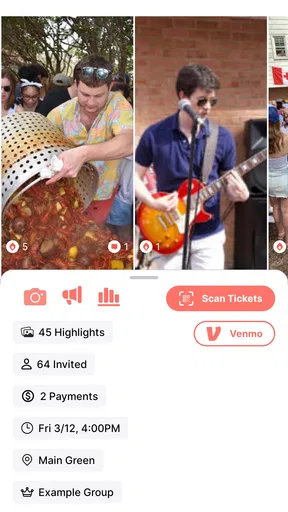
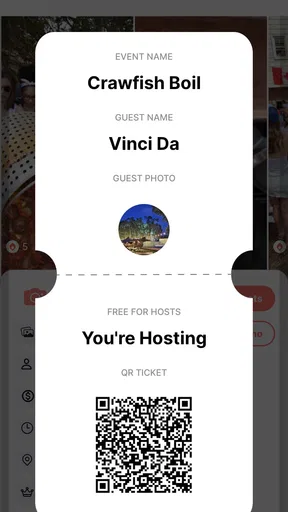
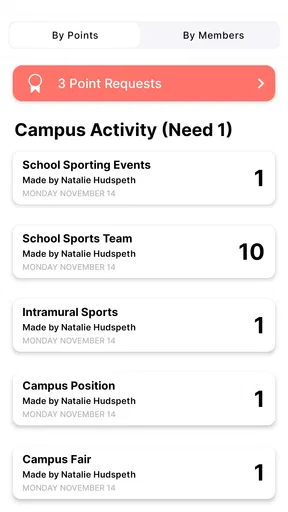
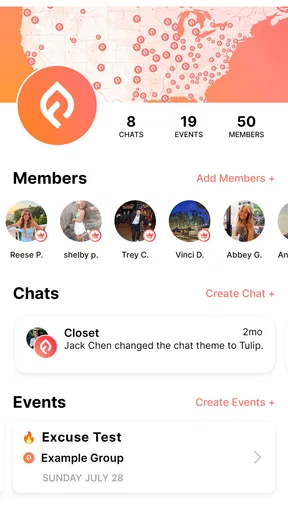
Our Review of Flare
 Analysis by Appyee
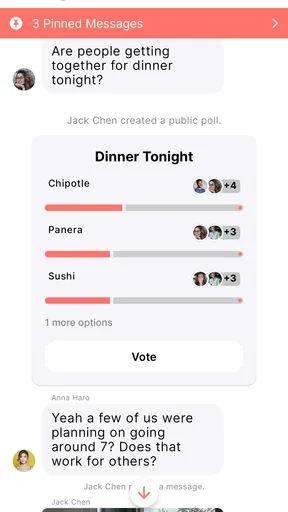
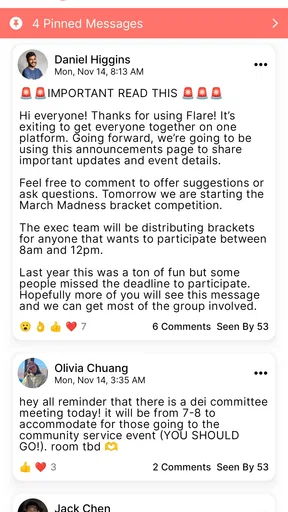
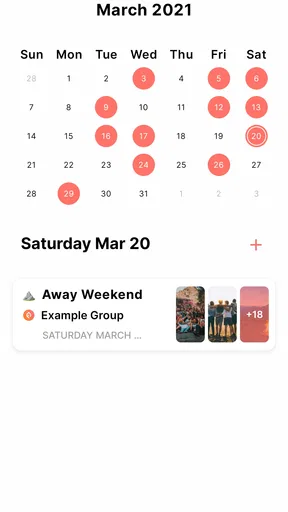
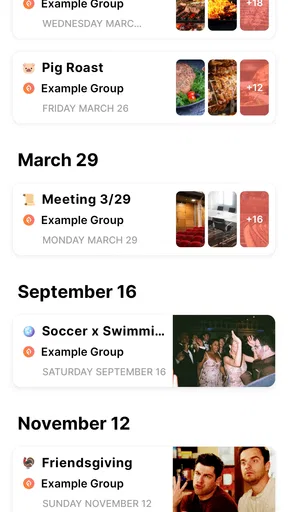
When I first tried Flare, I understood its appeal almost immediately: it is built around bringing a group’s communication into one shared place instead of scattering plans across separate chats, notes, calendars, and social feeds. That sounds simple, but it changes how a group behaves. Rather than asking everyone to remember which conversation contains the latest detail, the app gives the group a common space to return to.
Flare is a free social app from Flare App, Inc., with a Teen content rating. It has reached over ten thousand installs and holds a 4.6 average from around four hundred ratings, which gives it a small but encouraging footprint. The app was released on February 8, 2019, and the current version is 6.3.8 for devices running iOS 9 or later. I would describe it less as another general-purpose social network and more as a practical group hub.
One shared place changes group communication
The capability that matters most here is the all-in-one group approach. Flare is at its best when several people need to stay coordinated around the same activity, relationship, or ongoing plan. The value is not simply having another place to send messages. The value is reducing the number of places where important information can disappear.
In a normal group chat, conversation is usually the center of everything. That works for quick questions, jokes, and immediate decisions, but useful details can become difficult to find after a busy exchange. A restaurant suggestion may be buried under reactions. A change of meeting time may be missed by someone who checks later. A group can technically contain all the information it needs and still feel disorganized.
Flare’s central idea addresses that problem by making the group itself the starting point. I found this especially useful for groups whose discussions are not limited to a single moment. A one-off chat is fine for “Where are we meeting?” A shared group space is more helpful for planning a recurring activity, keeping a circle of friends connected, or managing several related conversations without losing the overall context.
The real benefit is continuity, not just conversation. When people return to the same group space, they are more likely to understand what is happening without requesting a full recap. That makes the app feel different from a conventional messenger, even though communication remains its foundation.
How the group-first design feels in practice
I would begin by treating each group as a small room with a clear purpose. That sounds obvious, but it is the difference between a useful setup and a noisy one. A group for a weekend plan should not also become the permanent place for unrelated jokes, work questions, and every future event. Keeping the purpose narrow helps the all-in-one idea work as intended.
Once a group has a defined reason to exist, the shared space becomes easier to scan. New members can understand why the group exists, while existing members have a consistent place to continue the conversation. This is a subtle advantage over using several disconnected chats, where the same people may repeatedly recreate context.
For an everyday example, imagine a group of friends organizing a monthly dinner. In a standard messaging app, one person may suggest a date, another may answer hours later, and a third may start a new conversation because the original thread is hard to locate. With Flare, I would keep the planning inside one group space, use the conversation to settle the details, and return to that same space for the next dinner rather than starting from zero.
The important workflow is to make the group the destination for decisions, not merely the place where people talk while deciding. If the final restaurant, time, or meeting point is left buried in casual messages, the app cannot solve the organizational problem by itself. I found that Flare works better when members deliberately bring the conclusion back into the group’s shared context.
Useful habits that make the app more effective
My first practical tip is to create a group only when there is a continuing reason for people to stay connected. If the purpose is a single short exchange, a regular messenger may be quicker. Flare becomes more valuable when the group needs to be revisited and when its members benefit from seeing the same context rather than receiving isolated updates.
My second tip is to establish a simple naming habit. A group title should tell members what they will find there without requiring them to open it. Names based on a clear activity or relationship are more helpful than vague labels. This matters when someone belongs to several groups and needs to choose the correct one quickly.
My third tip is to separate planning from general socializing when the group becomes busy. A lively conversation is enjoyable, but it can make decisions harder to recover. I would keep the group’s purpose visible in the way members post, placing concrete arrangements together and avoiding the assumption that every important detail will remain easy to locate forever.
That last point is also a limitation. An all-in-one group space can become an all-in-one pile if nobody maintains a little structure. Flare reduces fragmentation, but it does not remove the need for sensible group behavior. The app helps most when users treat shared communication as something to organize, not simply somewhere to pour every thought.
The best everyday scenario
The strongest use case I found is a small group with a shared routine but no need for a heavy project-management system. Think of roommates coordinating household matters, friends arranging regular outings, a volunteer circle discussing an activity, or relatives keeping up with plans that change over time. These groups often outgrow casual texting but do not want the complexity of a formal collaboration tool.
Consider roommates preparing for a move. One person needs to discuss dates, another is handling transport, and someone else is collecting questions about the new place. A typical chat can handle the messages, but the conversation may become difficult to follow as practical and personal topics mix together. A dedicated group space gives the roommates one recognizable home for the move, making it easier to return to the discussion after being away.
In that situation, I would use the group as a shared checkpoint. Before sending a new question, I would look through the existing conversation to see whether the answer had already been discussed. Before assuming everyone knows about a change, I would post it clearly in the group rather than relying on a private message. This habit makes the app’s main capability produce a real improvement: fewer duplicated questions and fewer missed updates.
Flare is also a reasonable fit for a close social circle that wants more continuity than a stream of unrelated direct messages. A group can provide a stable identity for the circle itself, rather than making communication depend on whichever person happens to start the latest chat. That distinction matters when the group’s relationships are more important than any single event.
However, I would not choose it as my first option for a large public community, a formal business operation, or a project requiring detailed task ownership and reporting. The all-in-one concept is strongest for groups that need shared context and easy participation, not for organizations that need strict workflows.
Where it differs from familiar alternatives
Compared with a standard messaging app, Flare’s advantage is conceptual rather than dramatic. Most messengers are designed around rapid conversation between contacts. Flare puts more emphasis on the group as a persistent unit. That can make it a better fit when the group itself is the thing people want to maintain.
Compared with a social network, Flare feels more focused. A broad social feed is useful for discovering updates from many people, but it is not always the best place to coordinate a private plan. Flare’s group-centered approach reduces the distance between the people involved and the purpose that brought them together.
Compared with a project-management app, it is easier to imagine casual users adopting Flare without training. A formal tool may be better when deadlines, assignments, checklists, and accountability are essential. Flare is preferable when the group needs a comfortable shared space and wants to avoid turning a social plan into an administrative exercise.
That middle position is both its strength and its boundary. It can be more intentional than ordinary chat while remaining more approachable than a work platform. Users who want advanced organization may find it too light, while users who only need instant messages may find the dedicated group structure unnecessary.
Tradeoffs I noticed before recommending it
The first tradeoff is adoption. A group tool is only useful when the people you want to coordinate with are willing to use it. If half the group stays in another messenger, the shared context becomes divided again. Before moving an active group to Flare, I would make sure everyone understands why the change is worthwhile and agrees to use the app consistently.
The second tradeoff is social friction. Asking friends or relatives to install a separate app can feel like extra work, especially when an existing chat already handles quick messages. Flare needs a clear purpose to justify that additional step. “It is another place to talk” is not a strong enough reason. “It keeps our recurring plans and group history together” is much more convincing.
The third tradeoff is the tension between simplicity and depth. A lightweight shared space is easier to approach, but it may not satisfy people who expect extensive controls for complex projects. I would not force Flare into a role it was not designed to fill. For a small social group, simplicity is a benefit. For a team managing many dependencies, a dedicated collaboration service may be the better choice.
There is also a privacy consideration in the everyday sense: group communication depends on members understanding what belongs in the shared space and what should remain private. I would avoid posting sensitive personal details merely because the group is convenient. A central space makes information easier for the intended group to find, but that same convenience means users should think before sharing.
The Teen rating is worth keeping in mind for families and younger users. It does not replace parental judgment or sensible group rules. I would explain to younger members how to handle unwanted contact, disagreements, and oversharing before treating any social app as automatically suitable for them.
Who gets the most from Flare
I think Flare is most useful for people who repeatedly coordinate with the same small circle. Its audience is not defined by a particular hobby as much as by a communication problem: too much context to keep in ordinary messages, but not enough complexity to justify a formal workspace.
It is a good match for a group that wants one recognizable home for plans, updates, and ongoing discussion. It is particularly appealing when members are tired of asking, “Which chat was that in?” or when each new event currently requires rebuilding the same group from scratch.
I would be more cautious about recommending it to someone who communicates mostly one-to-one, rarely returns to old conversations, or already has a group workflow that everyone follows successfully. Switching tools has a cost, and Flare should solve a visible problem rather than create a new routine for its own sake.
The developer, Flare App, Inc., has kept the product positioned as a social experience rather than presenting it as a specialized work system. That positioning makes sense to me. The app’s strongest quality is how it gives ordinary groups a little more structure without asking them to behave like a company.
My recommendation after using the current version
With version 6.3.8, I see Flare as a focused answer to a familiar group-communication problem. I would recommend trying it when your circle has recurring plans, shared context, and enough conversation to make ordinary chats feel scattered. I would not recommend installing it simply because you want another place for casual messages.
The best results come from choosing one clear purpose, inviting the people who genuinely need the shared space, and making final decisions visible instead of leaving them hidden among informal replies. Those habits are small, but they determine whether the all-in-one approach feels organized or overloaded.
Flare is free, which lowers the barrier to testing it with a real group rather than judging it in isolation. My honest view is that its success depends less on individual features than on whether the group is ready to adopt a shared home. If the answer is yes, it can make coordination calmer and easier to revisit. If the answer is no, a familiar messenger will probably remain the more practical choice.
For the right group, though, Flare is a useful bridge between casual chat and formal collaboration. It gives recurring social communication a clearer center without stripping away the relaxed feeling that makes people want to participate.
Verdict
Strengths of Flare
- Clean interface makes flare and notification activity easy to monitor.
- Quick access to important alerts helps reduce the chance of missing updates.
- Lightweight design keeps navigation responsive on most modern devices.
- Useful customization options let you tailor how alerts are displayed.
- Clear status information makes troubleshooting simpler for new users.
Limitations of Flare
- Some advanced features may require extra setup or technical knowledge.
- Compatibility can vary depending on the device, Android version, or iOS release.
- Frequent alerts may become distracting without careful notification settings.
- The app may offer limited value if you rarely use supported services.
- Background activity could have a small impact on battery life over time.
Similar Picks in This Category
View All
Meta Platforms, Inc.4.6

Instagram4.0

Likee-Live, Chat & Party Games
Likeme Pte. Ltd.4.4

Facebook Lite
Meta Platforms, Inc.4.5

TikTok - Videos, Shop & LIVE
TikTok Pte. Ltd.4.0

Moj: Free Short Drama & Reels
ShareChat4.1
Frequently Asked Questions
What is Flare and what can I use it for?
Flare is an app designed to help users manage and access its core features from a mobile device, depending on the version and platform available. Before downloading, check the official store description to confirm whether you are getting the social, productivity, entertainment, or utility version you need. The name may refer to more than one application, so verifying the developer is important.
Is Flare free to download and use?
Flare may be available as a free download, but some features can require in-app purchases, a subscription, or an account. Pricing and included tools may differ between Android and iOS. We recommend reviewing the store listing before installing, especially the subscription terms, trial period, renewal policy, and whether advertisements or premium limitations apply to the free version.
What permissions does Flare require?
The permissions requested by Flare depend on the features you use and the operating system installed on your phone. An app may request access to notifications, storage, camera, microphone, contacts, location, or account information. Review each permission during setup and allow only what is necessary. You can usually change these settings later through your device’s privacy controls.
Does Flare require an internet connection or account?
Many of Flare’s functions may require an active internet connection, particularly features involving synchronization, online content, messaging, cloud storage, or account-based services. Some basic options might work offline, but availability can vary by version. Check whether registration is mandatory before downloading, and use a reliable connection when signing in or updating the application.
Is Flare safe to install on Android and iPhone?
The safest way to install Flare is through Google Play or Apple’s App Store, using the listing published by the verified or official developer. Avoid modified APK files and unofficial download pages, as they may contain unwanted software. Before installation, check recent reviews, requested permissions, privacy information, update history, and the developer’s support details.
